Equipment: Tools for keeping your distance
We judge equipment by one measure: does it let you stay further away and quieter for longer? Brand prestige, megapixel counts and burst rates come a long way second.
Close framing is not close approach
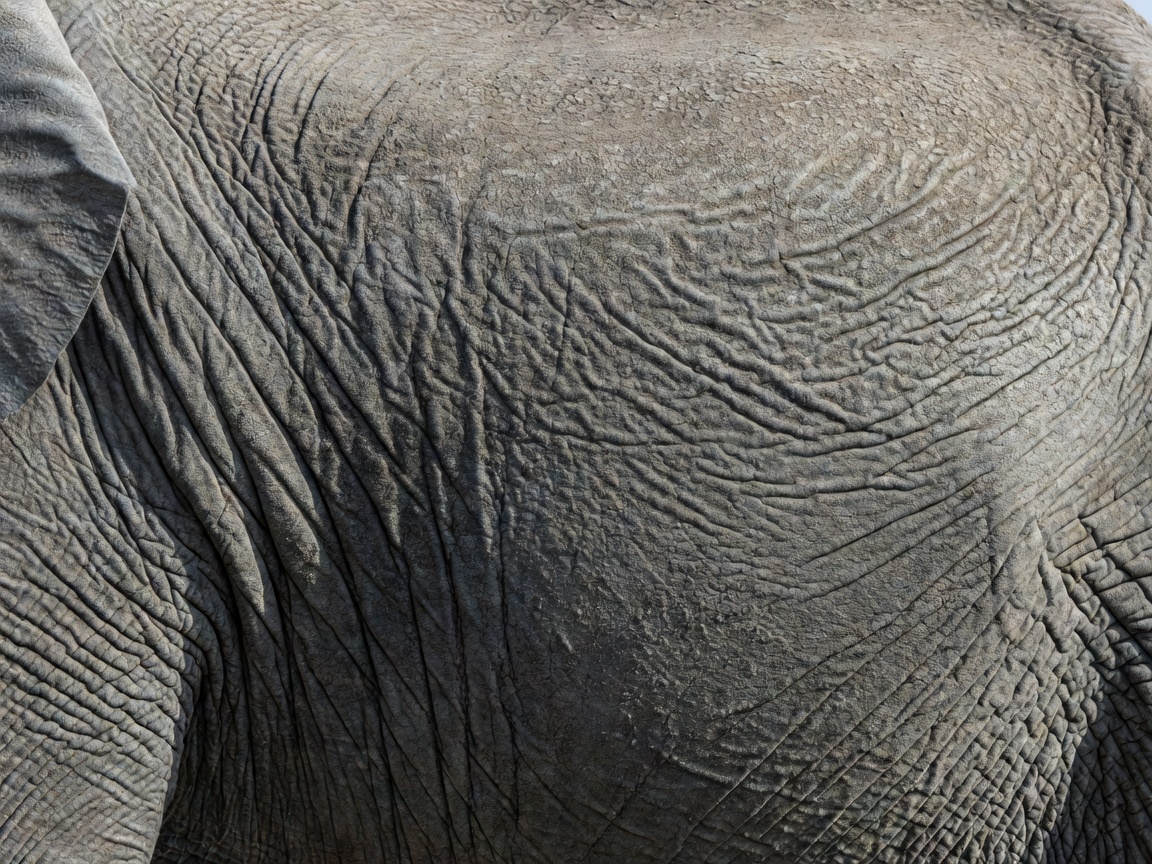
A frame-filling portrait of an elephant's eye looks intimate, but the intimacy is optical. Doubling your focal length doubles the subject's size in the frame from the same spot. A 600mm lens shows an animal at the same size as a 300mm lens would from half the distance. On an APS-C sensor, with its roughly 1.5× crop, that 600mm frames like a 900mm lens on full frame.
This is the single most useful idea in ethical wildlife photography. Every millimetre of focal length is a metre you do not need to walk, drive or paddle toward the animal. When we recommend longer lenses, it is not for drama; it is to make restraint practical.
The flip side: a longer lens also tempts some photographers to stay at a sighting long past the point of courtesy. Distance should come with a time limit too.
Telephoto lenses for wildlife
Approximate characteristics common to current lenses in each class. Exact weights and apertures vary by manufacturer.
| Lens class | Typical aperture | Handholdable | Best for | Distance verdict |
|---|---|---|---|---|
| 70–200mm | f/2.8–f/4 | Yes | Habitat scenes, large mammals close to tracks | Too short for most birds; good for context |
| 100–400mm | f/4.5–f/5.6 | Yes | Savanna mammals from vehicles | Excellent all-rounder for safari |
| 150–600mm / 200–600mm | f/5–f/6.3 | With practice | Birds, shy mammals, wetland edges | Strong reach; benefits from support |
| 500mm / 600mm prime | f/4 | Rarely | Low light at dawn and dusk | Maximum distance and quality; heavy and costly |
| 1.4× teleconverter | Loses one stop | Adds little weight | Extending a zoom on bright days | Cheap extra reach; slower focus |
Steady without spreading out
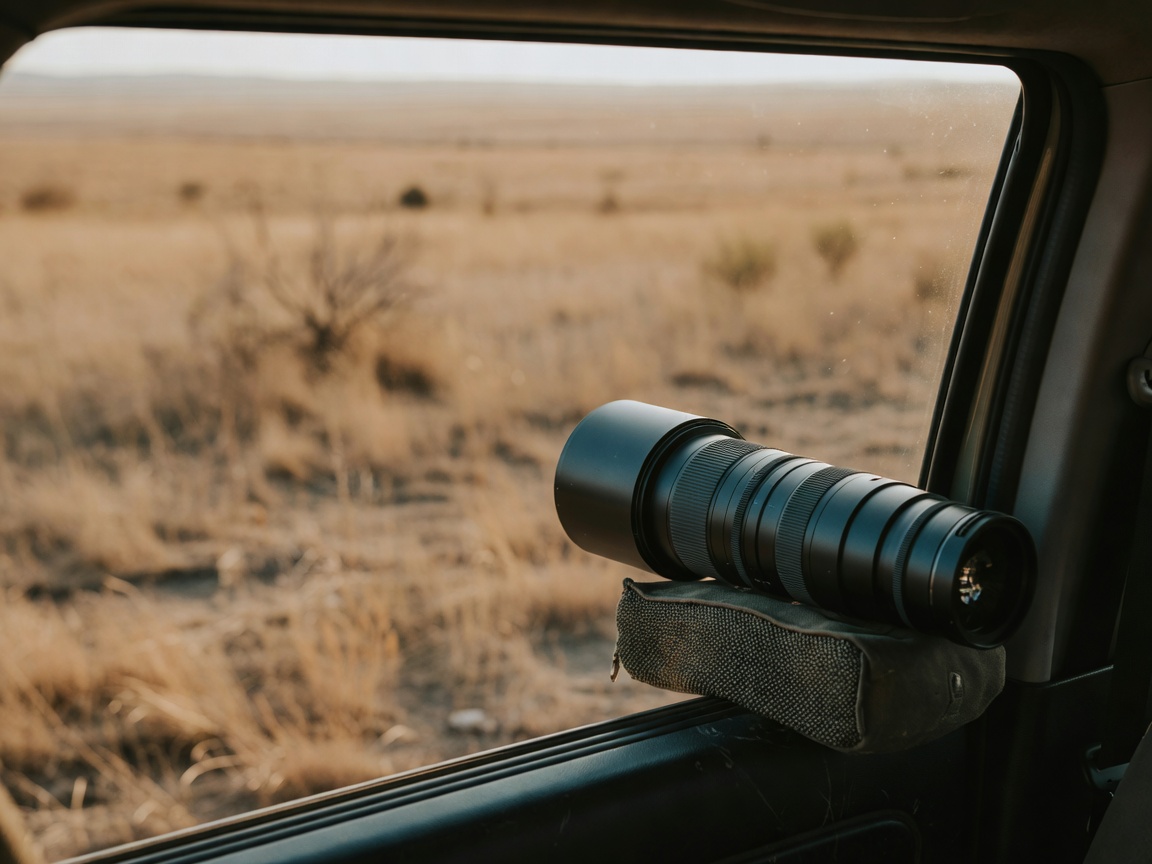
In a safari vehicle, tripods are awkward and transmit engine vibration. A simple beanbag, filled locally with rice or beans to save luggage weight, rests on a door frame or roof hatch and absorbs movement. Window clamps and gimbal heads suit those who shoot from a fixed seat.
On foot, a monopod is far less intrusive than a tripod and quicker to move without noise. In hides, a low tripod with a gimbal head lets you wait for hours without fatigue, which is the whole point of a hide.
Field tools compared
| Tool | Setting | Advantage | Caution |
|---|---|---|---|
| Beanbag | Vehicle | Silent, absorbs vibration | Ask the driver to switch the engine off |
| Monopod | Walking trails | Light, quick, quiet | Limited for very long primes |
| Tripod + gimbal | Hides, fixed blinds | Hours of comfortable waiting | Set up before wildlife arrives |
| 8×42 binoculars | Forest, general birding | Wide, bright view | Less detail at range |
| 10×42 binoculars | Open country, wetlands | More detail at distance | Narrower field, more shake |
Quiet settings, quiet habits
Switch to an electronic or silent shutter where your camera offers one; a rapid mechanical burst can startle birds at close range. Turn off focus-confirmation beeps. Fix lens caps to their tethers so they do not clatter onto a vehicle floor.
Avoid flash on wildlife, and especially on nocturnal animals. Modern sensors handle high ISO well, and a grainy honest frame beats a sharp one that left an owl blinking. Drones are banned in many national parks, including Kruger and across Kenya's protected areas without special permits; check rules before packing one.
Camera traps can document shy species without any human presence, but place them only with landowner permission, away from nests and dens, and check them infrequently so your scent trail does not lead predators to the spot.
Finally, dress for the habitat in muted, natural tones, and pack less. Every time you rummage through a bag, you are not watching. For timing your trip, continue to Seasonal Travel.